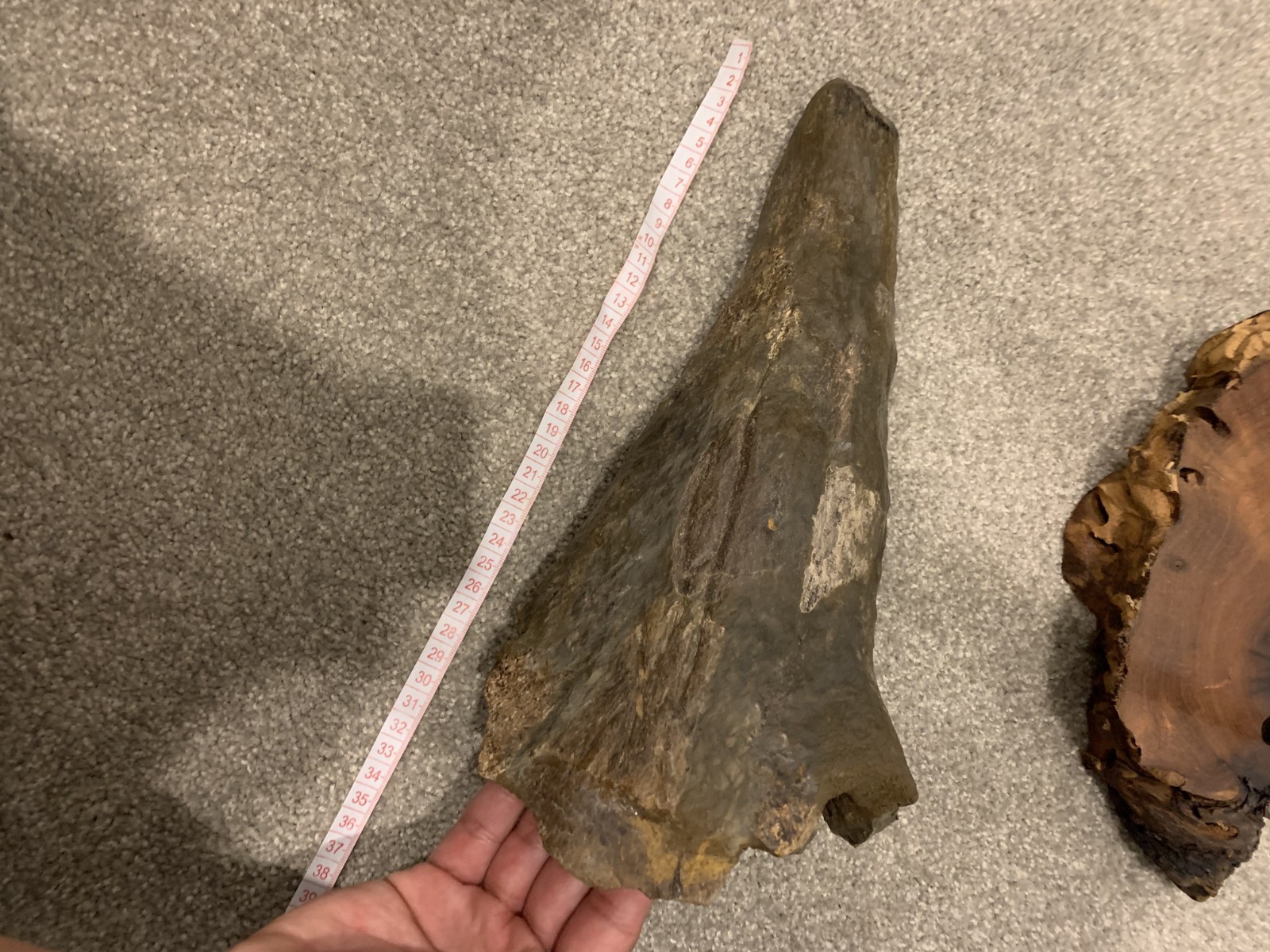
Dinosaur Triceratops Brow Horn Fossil

When you click on links to various merchants on this site and make a purchase, this can result in this site earning a commission. Affiliate programs and affiliations include, but are not limited to, the eBay Partner Network.

Dinosaur Triceratops Brow Horn Fossil:
$9999.00
Triceratops Brow Horn with stand, 5%-10% restoration outlined in the photos, will be bubble wrapped properly for security and shipping
The brow horns of Triceratops first appear in the fossil record during the late Cretaceous Period, approximately 68 to 66 million years ago. Structurally, they were composed of a bony core made of solid bone, covered in life by a thick keratin sheath, similar to the horns of modern cattle or rhinoceroses. This keratin covering would have extended the horn’s length and sharpened its tip, making it far more formidable than bone alone suggests. The horns curved forward in adults, positioning them ideally for head-to-head confrontations.
One of the most widely supported functions of the brow horns is defense against predators, particularly large theropods such as Tyrannosaurus rex. The forward orientation of the horns allowed Triceratops to face predators directly, presenting a lethal barrier of bone and keratin. Fossil evidence supports this defensive role: some T. rex specimens show healed injuries consistent with horn wounds, suggesting that encounters between these animals were both violent and sometimes survived. A charging Triceratops, head lowered and horns aimed, would have been an extremely dangerous opponent.
However, defense alone does not fully explain the brow horns. Many paleontologists argue that they also played a role in intraspecific combat, particularly during mating competitions. Pathologies and healed fractures found on Triceratops skulls closely resemble injuries seen in modern animals that lock horns, such as bison. This suggests that males—or possibly both sexes—used their brow horns to wrestle and push rivals, establishing dominance without necessarily killing one another.
In addition to combat, the brow horns likely served as visual signals. Their size, shape, and orientation changed as individuals matured, meaning they could communicate age, health, and possibly sex to others of their species. In the dense, predator-rich ecosystems of late Cretaceous North America, being able to quickly identify allies, rivals, or potential mates would have been a significant advantage.
Ultimately, the brow horn of Triceratops represents more than a simple weapon. It was a multifunctional structure shaped by natural selection to meet the demands of survival, reproduction, and social interaction. As one of the final expressions of ceratopsian evolution before the end-Cretaceous extinction, the brow horns of Triceratops stand as a powerful reminder that even the most dramatic features in nature are rarely built for a single purpose.
Dinosaur Triceratops Brow Horn Fossil:
$9999.00
Related Items:
Triceratops Skull Dinosaur Fossil Spectacular 85% Genuine
$1000000.00
Triceratops Horn & Partial Dinosaur Skull Fossil Hell Creek Formation Juvenile
$14999.99
Torosaurus Triceratops Ischium - Dinosaur Fossil Hell Creek Formation Cretaceous
$14000.00